
Is Your Office Catering Reflecting Your Company Values?
Increasingly, employees across London are being treated to catered meals in the office as a way to incentivise in-person work and improve the workplace experience. But here's the question most companies aren't asking: what is your food saying about your brand?
The numbers tell an interesting story. The UK contract catering market is booming, projected to grow from £12.04 billion in 2023 to £18.68 billion by 2031. Perhaps most tellingly, 80% of UK workers say free meals would encourage them to return to the office more frequently. Workplace catering has transformed from an occasional perk into a strategic tool for managing hybrid work and a core part of workplace culture.
But while budgets are growing, something critical is being overlooked: your workplace catering is quietly broadcasting your company values whether you realise it or not.

More London offices are offering catered meals to encourage in-person work and boost morale. But ask this: what does your food say about your brand?
The Disconnect Between Words and Plates
Walk into most corporate offices and you'll see values statements on the walls. Sustainability. Wellness. Community. Diversity and inclusion. These aren't just buzzwords, companies invest serious resources in defining and communicating their brand values.
Then walk into the break room when it’s time for lunch.
Packaging waste from take-aways or old fashioned stainless steel chafing dishes. Poor labelling and unclear allergen information. Ingredients sourced from who-knows-where. The disconnect is glaring, yet it happens every single day in offices that genuinely believe they're living their values.
The reality is that food choices communicate priorities loudly and clearly. When companies source local ingredients, choose sustainable practices, or provide thoughtful plant-based options, they're making a statement. When they don't, they're making a statement too, just not the one they intended.
Why Food Matters More Than You Think
Your catering program isn't just logistics. It's one of the most tangible, frequent touchpoints employees have with company culture. Unlike a values statement on your website or a sustainability report published annually, your food shows up multiple times a week. Employees experience it directly. They notice what you prioritise and what you don't.
And they care. Research shows that a significant majority of employees, around 65%, would prefer to work for businesses with strong environmental policies. Younger employees in particular, those aged 25 to 35, are especially attuned to sustainable practices. When your daily catering choices contradict your stated environmental commitments, that inconsistency doesn't go unnoticed.
The same principle applies across other value dimensions. If you champion employee wellness but consistently provide only heavy, unhealthy options, what message does that send? If you celebrate diversity but fail to accommodate dietary restrictions tied to culture or religion, you're missing an opportunity to demonstrate true inclusion.
What Values-Aligned Catering Actually Looks Like
So what does it mean to align your catering with your values? It starts with asking honest questions:
If sustainability is a core value: Are you working with caterers who prioritise local suppliers? Have you eliminated single-use plastics? Do you track and minimise food waste? Are you choosing seasonal ingredients that reduce environmental impact?
If wellness matters to you: Do your menus offer genuinely nutritious options, not just a token salad alongside fried foods? Are portion sizes reasonable? Do you provide transparency about ingredients and nutrition information?
If diversity and inclusion are priorities: How thoughtfully are you accommodating dietary restrictions, not just allergies, but religious, cultural, and ethical food choices? Are diverse cuisines represented in your rotation?
If you have ESG commitments: How does your daily catering align with those corporate social responsibility goals? Can you trace your supply chain? Are you measuring the environmental impact of your food programme?
The companies getting this right aren't just checking boxes. They're integrating their values into every decision, from vendor selection to packaging to menu design. Some are even limiting their caterer searches to providers who share their environmental commitments.
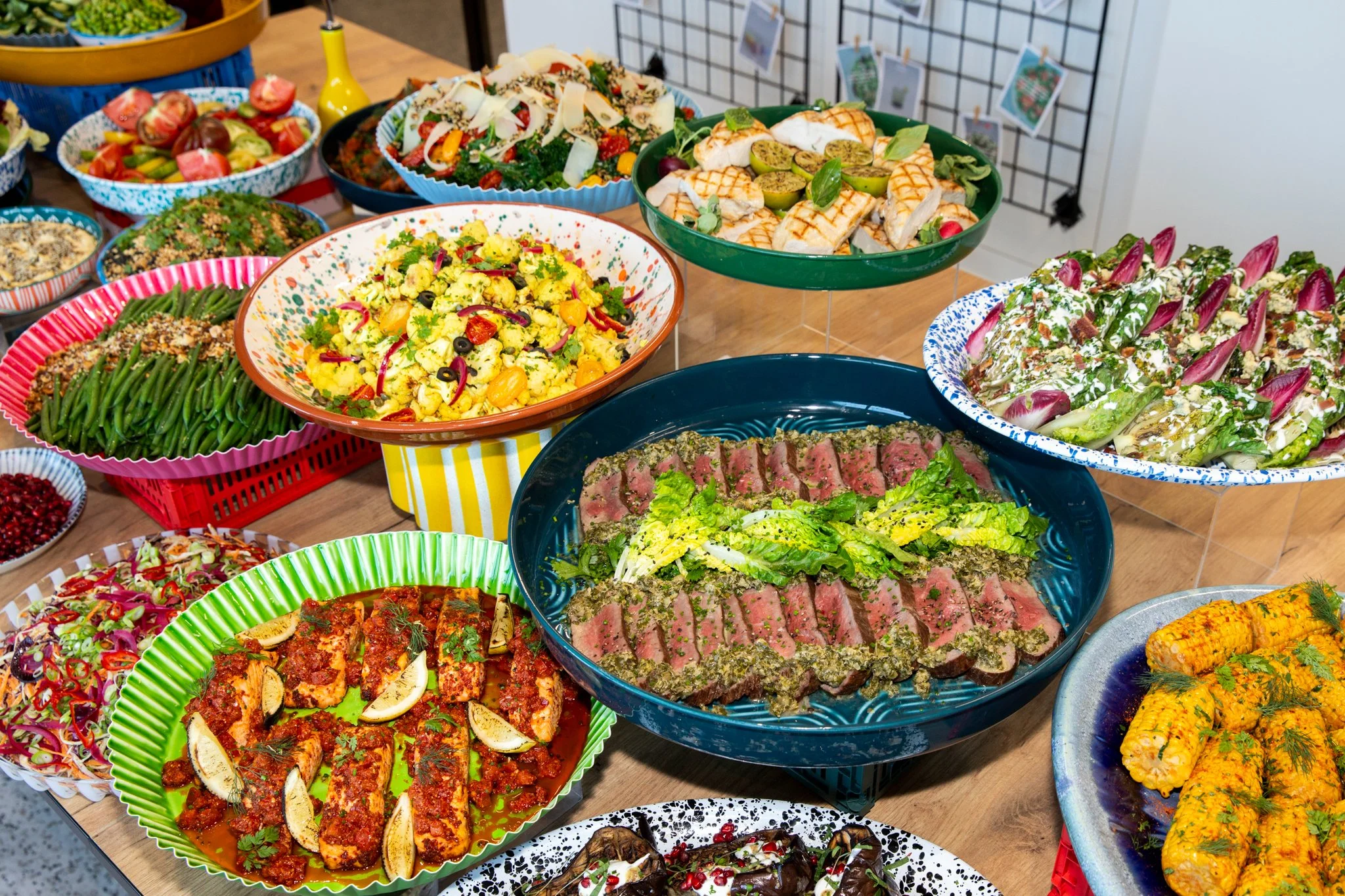
Food choices show what matters. When companies buy local, use sustainable methods, or offer good plant-based options, they send a clear message. If they don’t, they still send a message, just not the one they wanted.
Beyond Values: The Style Match
But here's where many companies miss another critical layer: it's not just about what values your food represents, it's about whether the entire look, feel, and style of your catering matches your brand identity.
Think about it. If you're a sleek tech startup with a minimalist brand (clean lines, modern design, a carefully curated visual presence) and then your Tuesday lunch is generic sandwich platters and institutional buffet food, there's a disconnect. The food itself is telling a completely different story than your brand.
The style of cuisine, the way food is presented and plated, the visual appeal, the overall vibe of the meal - all of it contributes to brand perception. It's not superficial - it's about coherence and consistency across every touchpoint.
Consider these questions about your catering's identity:
Does your food style match your brand personality? If you're a creative agency with bold, innovative branding, does your catering reflect that energy? Are you bringing in interesting, creative cuisines? If you're a law firm with classic, sophisticated branding, does your food convey that same refinement and attention to quality?
Are you creating an experience worth talking about? In an age where employees photograph and share their workplace experiences, your catering is literally being broadcast. Does it look like something that represents your brand well when it's shared? Is the food visually appealing and thoughtfully presented?
Does the cuisine match your brand character? If your company brand is cutting-edge and experimental, are you stuck serving the same tired corporate lunch rotation? If your brand celebrates craftsmanship and attention to detail, does your food show that same care in preparation and presentation?
Is there a cohesive story? Great catering tells the same story your brand tells elsewhere. If your company celebrates global thinking and diversity, does your food rotation reflect cuisines from around the world? If your brand is about innovation, are you featuring forward-thinking food trends and interesting culinary concepts? If you position yourself as premium and high-quality, does your catering meet that standard?
The most sophisticated companies recognise that food style and presentation are extensions of their brand identity. They work with caterers who understand their style and can deliver food that feels like it belongs to their brand family and not like a generic corporate afterthought.
The Tuesday-Thursday Test
Here's a practical way to audit your program: focus on those peak hybrid days when most employees are in the office, typically Tuesday through Thursday. These are your highest-visibility catering moments.
On those days, does your office catering reinforce your brand story, or undermine it? Would a new employee understand your company values by looking at what's served for lunch? Would a client visiting your office see consistency between what you say and what you serve?
Making the Shift
Aligning your catering with your values doesn't have to mean overhauling everything overnight or breaking your budget. Start with the low-hanging fruit. Switch to compostable packaging. Add clear labeling for dietary accommodations. Source from one local restaurant per week. Ask your current caterers about their sustainability practices.
The point isn't perfection, it's intentionality. It's recognising that every meal is an opportunity to reinforce who you are as an organisation.
Because here's the truth: your employees are already drawing conclusions about your company based on the food you provide. Your clients and visitors are too. The only question is whether you're shaping that narrative deliberately, or leaving it to chance.
Your catering programme is telling a story about your brand. Make sure it's the story you want to tell.
